- Home
- SALE
- Latest Releases
-
Brands
- Alumilite Resin
- Bunty's Paints
- Guild Lane
- Mint by Michelle
- Pentart Craft Supplies
- PolyOnlay Decorative Shapes
-
Redesign With Prima
- All Redesign With Prima
- All RWP Transfers
- Small Décor Transfers
- Middy Décor Transfers
- Maxi Décor Transfers
- Large Décor Transfers
- Metallic Décor Transfers
- H2O Décor Transfers
- All RWP Decoupage
- A1 Decoupage Papers
- A3 Decoupage Papers
- A4 Decoupage Papers
- 19"x30" Decoupage Papers
- Chalk Paste
- Décor Poly - Flexible Appliques
- Gold Leaf & Gilding
- Mica
- Silicone Moulds
- Stamps
- Wax
- Sophie James Decor Paint
- Three Yellow Goats
- Two Fussy Blokes Rollers & Brushes
- Zibra Brushes
- Products
- LWB Upcycled
- LWB Vintage
- Gift Cards
- How-To Guides
- Furniture Artist Focus
- Blog
- Join LWB Upcycled
- —
- Sign In
Furniture Artist Focus - Dresser & Drawer
2026 marks an exciting new chapter for Little White Bird…
𝐋𝐖𝐁 𝐔𝐩𝐜𝐲𝐜𝐥𝐞𝐝 is our newly launched curated marketplace — a carefully considered space dedicated to showcasing exceptional furniture artists and bringing their work together to discover and purchase in one beautifully edited place. Here, you can get to know the makers behind the work, explore their distinctive styles, and browse pieces that are ready and waiting to become part of your home — one-of-a-kind works designed to stop you in your tracks.
For our first Furniture Artist Focus of 2026, we’re delighted to introduce Demi of Dresser & Drawer. Her work is one I’ve admired for a long time, and she was a natural choice to become the first artist to join LWB Upcycled.
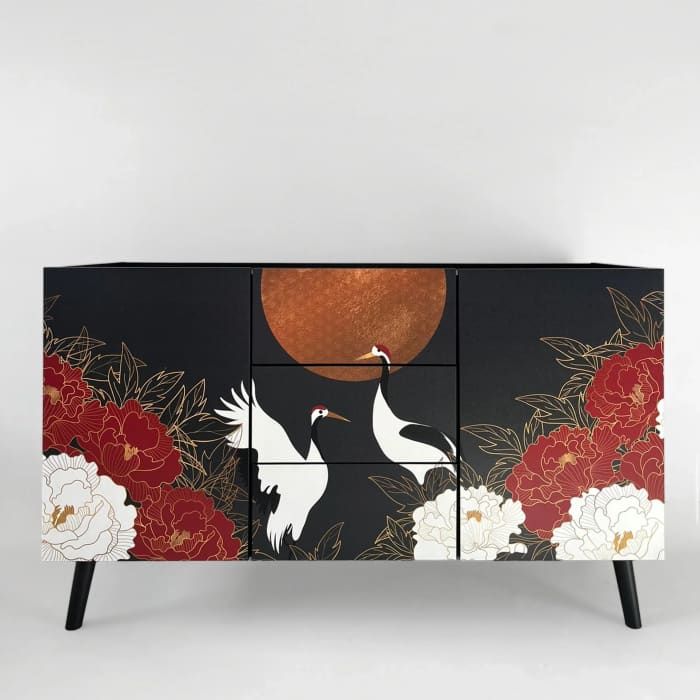
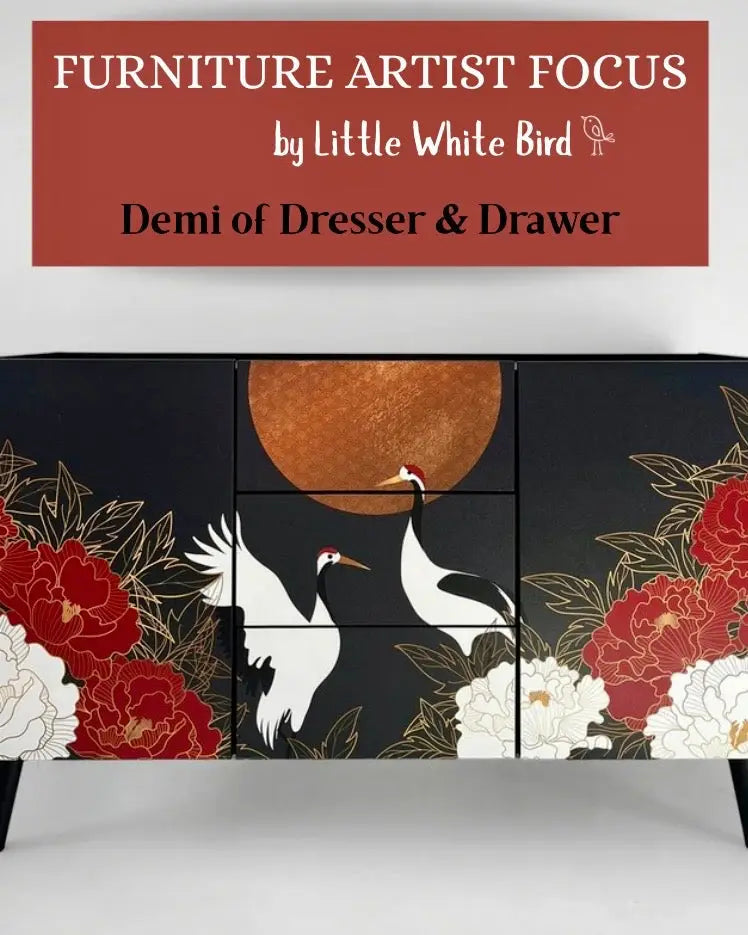 A furniture artist whose practice blends disciplined restoration with considered, design-led creativity, Demi is known for her elegant approach to vintage furniture. Drawing on mid-century modern forms and subtle oriental influences, her pieces feel both contemporary and timeless.
In this interview, Demi shares her journey into furniture upcycling — from discovering the craft as a creative outlet to training professionally through an apprenticeship. She talks candidly about her process, inspirations, commitment to sustainability, and what goes into creating one-of-a-kind pieces designed to last for decades.
Story & Background
How did you first get into furniture upcycling?
I originally discovered furniture upcycling as a hobby. After losing my job during Covid, I found an apprenticeship in a professional upcycling studio. That experience allowed me to learn the craft properly and gave me a strong foundation in restoring and redesigning vintage furniture.
What inspired you to become a furniture artist?
Staying at home with a small child was creatively challenging, and I was searching for something that would help me feel balanced and fulfilled. I began with decoupage and painting small items like trays and wooden boxes, then gradually moved on to chairs, coffee tables, and larger furniture. Becoming an apprentice was a turning point—it taught me the professional, disciplined approach behind high-quality vintage restoration.
Do you remember the first piece you ever transformed?
Yes—it was our dining table and chairs. We lived in a small apartment and needed something functional that wouldn’t dominate the space. Finding and transforming that piece felt very personal and meaningful.
Creative Style & Process
How would you describe your signature style?
Neat, elegant, and considered. I love mid-century modern furniture and contemporary design, with a strong influence from oriental aesthetics—particularly Japanese art and culture.
Where do you find inspiration?
Nature is a constant source of inspiration, along with books, films, architecture, galleries, and museums. I enjoy collecting textures, details, and close-up imagery, which later evolve into patterns and design concepts.
Can you talk us through your process?
I work almost exclusively on commission, so everything begins with understanding the client and their space. Once the concept is clear, I source the right vintage piece and create digital mock-ups to visualise the design. Clients are welcome to be involved throughout. When the piece is finished, I arrange delivery—seeing it in its new home is always the most rewarding moment.
What techniques do you most enjoy working with?
Decoupage is my favourite. Applying printed designs, layering finishes, and sealing everything with varnish allows me to create depth and durability. Designing bespoke artwork is where I feel most creative.
Do you have favourite colours or finishes?
I enjoy all colours, but I’m particularly drawn to darker tones such as black and deep blue. A varnished finish adds sophistication, modernity, and long-term protection.
Story Behind the Pieces
What makes your pieces unique?
Every piece is one of a kind. Even when a design is revisited, it’s always adapted to suit the furniture and the interior it’s made for. Vintage furniture has its own history, which naturally makes each piece different.
Is there a recent piece that feels special to you?
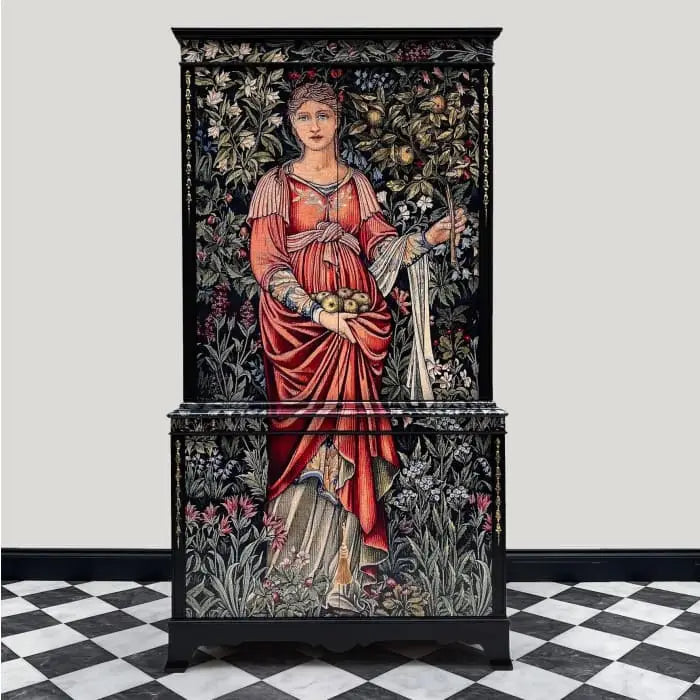
One piece that feels particularly special is the Pomona drinks cabinet I worked on recently. The front features a William Morris tapestry depicting the fertility goddess Pomona - a design choice I selected for its richness, symbolism, and timeless beauty.
The Pomona Drinks Cabinet is currently available through LWB Upcycled.
How do you choose the furniture you work with?
The choice is client-led. I source pieces based on size, shape, and style requirements, always prioritising quality. Even if a piece needs repair, it must be structurally sound and capable of lasting for many more decades.
Quality, Sustainability & Values
Why do you prefer working with vintage furniture?
Vintage pieces are traditionally constructed and far better made than much of today’s furniture. They have character, longevity, and integrity.
Why is sustainability important to you?
We don’t need to produce more when so much already exists. I come from a background where reuse was a necessity, not a trend. Upcycling feels like a natural and responsible way of creating.
How does upcycled furniture compare to buying new?
The difference in quality is undeniable. Vintage furniture is better built, more interesting, and far more individual—especially mid-century modern pieces, which both my clients and I love.
For Customers
What kind of homes suit your work?
My clients are wonderfully varied. Some want a statement piece for a calm, minimalist interior; others want something deeply personal for rich, maximalist spaces. I enjoy designing for both.
Any tips for caring for upcycled furniture?
Paint and varnish take around four weeks to cure fully, so extra care is important during that time. Long-term, gentle cleaning and avoiding harsh chemicals will keep the piece looking beautiful.
What would you want buyers to understand about your work?
Every inch of each piece is worked on multiple times. Restoration involves many stages, all done by hand, and vintage furniture often presents unexpected challenges. That’s what makes each piece truly unique.
What would you say to someone unsure about buying upcycled furniture?
Don’t hesitate. You’ll own something better made, environmentally responsible, and entirely one of a kind.
Looking Ahead
What are you excited to work on next?
Upcoming projects inspired by Japanese manga—bold, unusual, and creatively exciting.
Do you have any dream projects?
I would love to create large-scale luxury statement pieces for shops or retailers—functional furniture that also feels like art.
Our thanks to Demi of Dresser & Drawer for sharing her story and craft with us.
You can explore Demi’s available pieces and learn more about her work as part of LWB Upcycled. Follow us on social media to keep up with Demi’s latest creations as they become available.